#18 Yellow-green-red zone
⏱ Approx. 6 - 48 hours
𐀪 4-6 people
❔ Several innovation processes consist of almost the same phases but are called slightly different things. Therefore, tools other than yellow-green-red can also be used. For example, the FIRE model contains some of the same items. Source: www.blivklog.dk
background
BAAA often uses the ‘yellow-green-red’ innovation zone tool, for example in EiT, in innovation camps and in other ideation processes.
purpose
The purpose of this tool is to initiate, promote and ensure a structured idea development and selection process, which provides enough ideas for an innovation challenge in order to create a solution. The zone tool process is completed after the selection of an idea and does not focus on ”market clarification”.
procedure
Course of action:
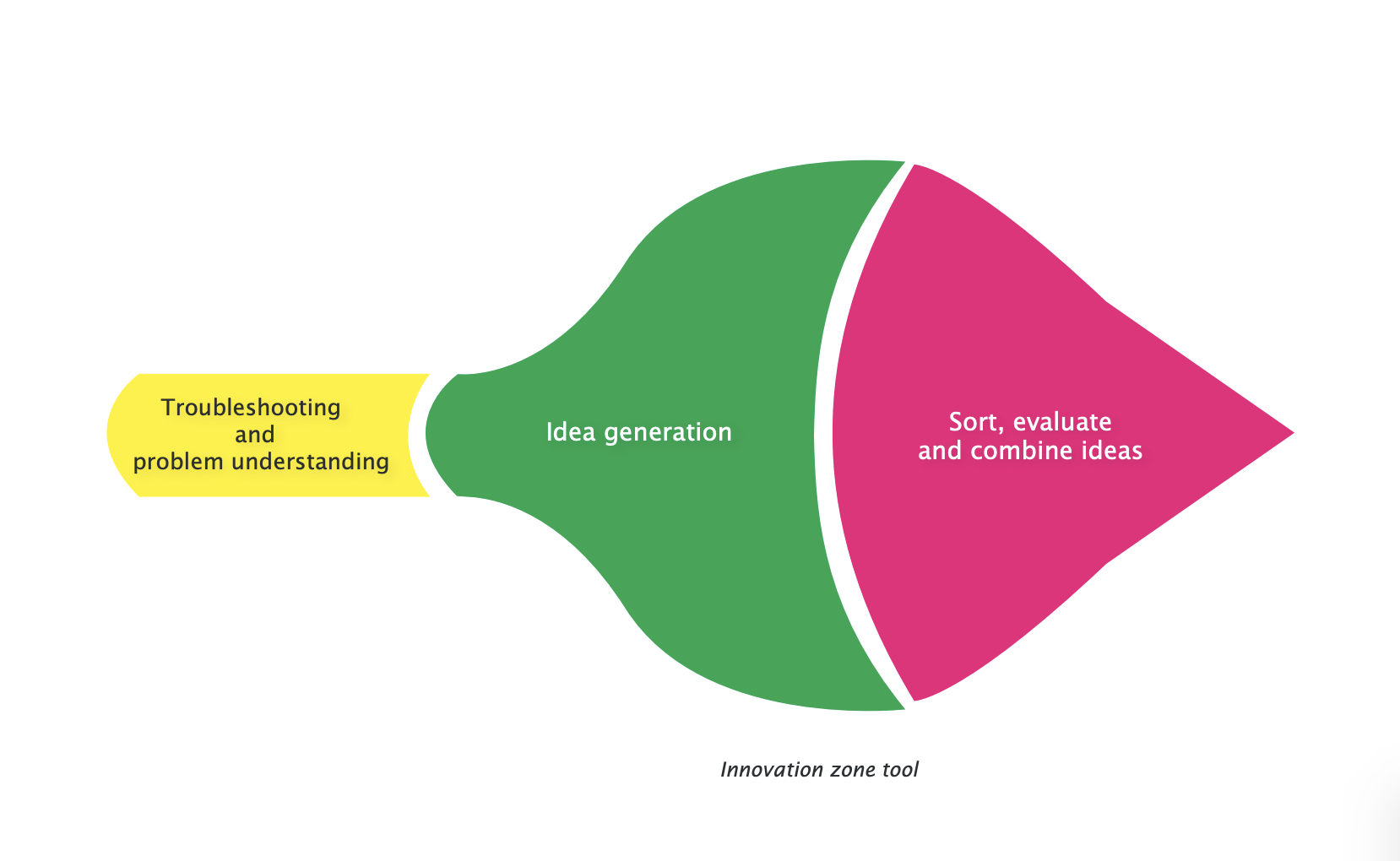
The process consists of three phases. After you have presented the challenge to the team, the team members should go through the different zones. The yellow zone involves the establishment of a basic understanding of the problem, the green zone concerns the idea development, and the red zone implies the sorting of ideas and idea selection.
Green zone: Idea generation
In the green zone it is important that the team has agreed on rules for cooperation. It may be that everything is allowed, that everybody is positive and that no ideas must be rejected. The team must constantly move forward and not ”just” fall in love with their first idea. This zone is about getting as many ideas as possible, and therefore “creative” exercises form a great tool for this process. It may also be a good idea to switch between working individually, working together, two and two or as a team.
Yellow zone: Troubleshooting and problem understanding
In the yellow zone, it is crucial that the team is working to get a common understanding of the framework for the overall challenge. The team must discuss definitions and have framed the understanding of the challenge and pinpoint the problem so that it fits in context to the team’s understanding of the problem. Information gathering is often necessary in order to address the lack of understanding of the problem. The team must achieve a satisfactory level of knowledge in the yellow zone before processing the green zone. However, the team should not be experts or crush their own creativity in data collection. Yellow zone must be completed by the team defining the problem or problem area that they will work on.
Red zone: Sort, evaluate and combine ideas
The red zone resembles the process most people are familiar with from the education structure. It is easier to ”crush” ideas than to get them. However, it may be a challenge to ”kill your darling” ideas and therefore difficult to work structured in the red zone, as many teams have already decided on which idea they want to work on without considering exactly why. Therefore, a structured process through
the red zone is crucial. . The team can use the exercises in the chronological order they are written in, or they can be adapted to the team’s needs. If the team thinks it is necessary to go back to the green zone, it might be healthy to go back and develop the idea even more.
practical matters
- Lots of paper, pencils and post-it notes
- Include inspirational material such as weekly magazines and creative materials such as glue, wood, cardboards, etc.
- Work with Post-It notes in the green zone, and it is important that only one post-it note is used for each idea and should be mobile, in order to be used later on in the red zone.
further information
You can find further exercises to use for the three zones at the following link:
https://www.expertsinteams.org
example