#13 Your contribution to the team
⏱ Make sure that there is enough time to review both positive and less positive contributions to the team.
𐀪 4-6 people
❔ It is important to stress that there are no correct or incorrect answers. How- ever, it is about the perception of contributions and roles. At the end of the exercise, the team should have the same perception of the different team members and as to who contributes with what. In this way, the team gets a common understanding of the team. Once in a while the team may repeat the exercise.
▷ Watch video on www.expertsinteams.org
background
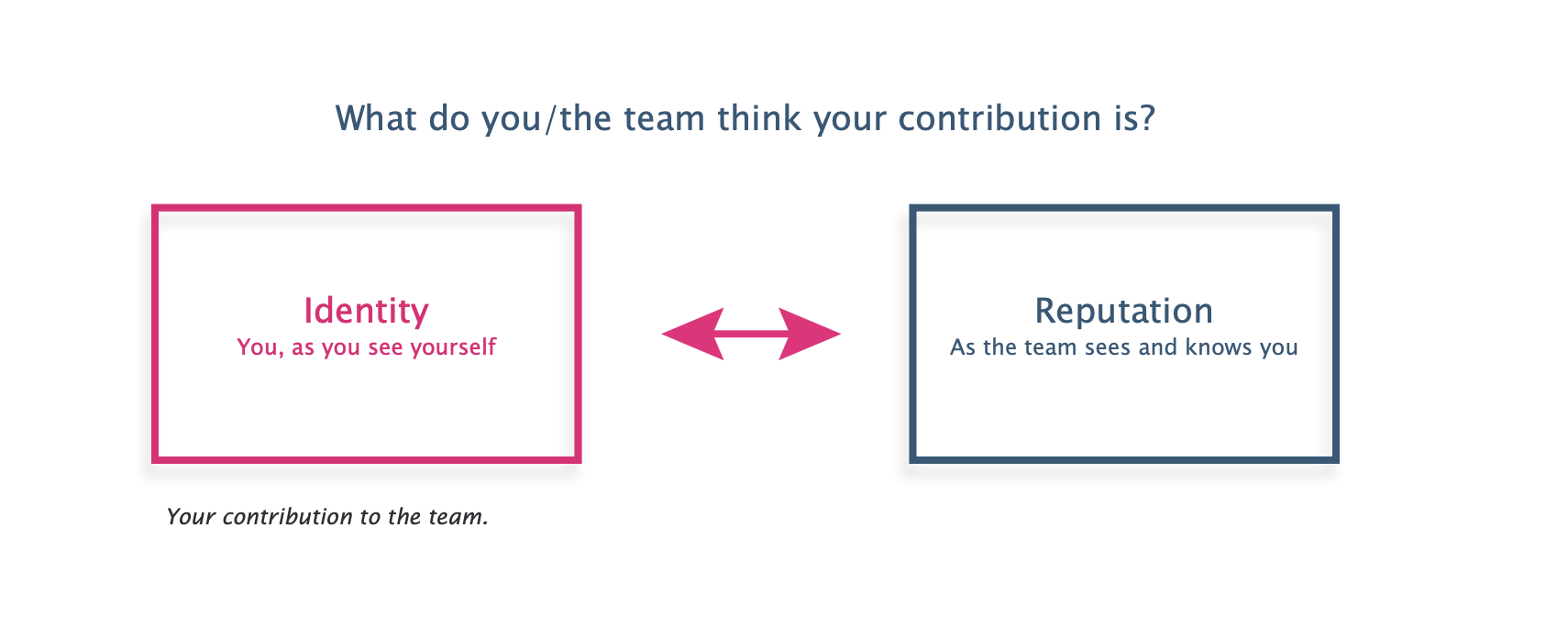
In each team, every member has a functional role that covers his or her work. However, each team member also has psychological roles that are determined by the individual member’s contribution to the team. This is defined by the individual’s view on own identity and reputation compared to the other team members’ perception of this.
purpose
The purpose of the exercise is to visualise, understand and improve the self-awareness between the individual team members and the psychological roles within the team. Furthermore, the exercise will shed light on the dynamics of the team in cases where there is a disagreement between the team and the individual team member’s perception of own psychological role.
The purpose of ”Your contribution to the team” is to locate and select the psychological roles that each team member should contribute to the team. To reach a common understanding of the psychological roles, it is important to get a deeper understanding of each other. A common understanding is a great starting point for a team. It boosts collaboration within the team and it increases the chances that the right skills are used for the right task.
procedure
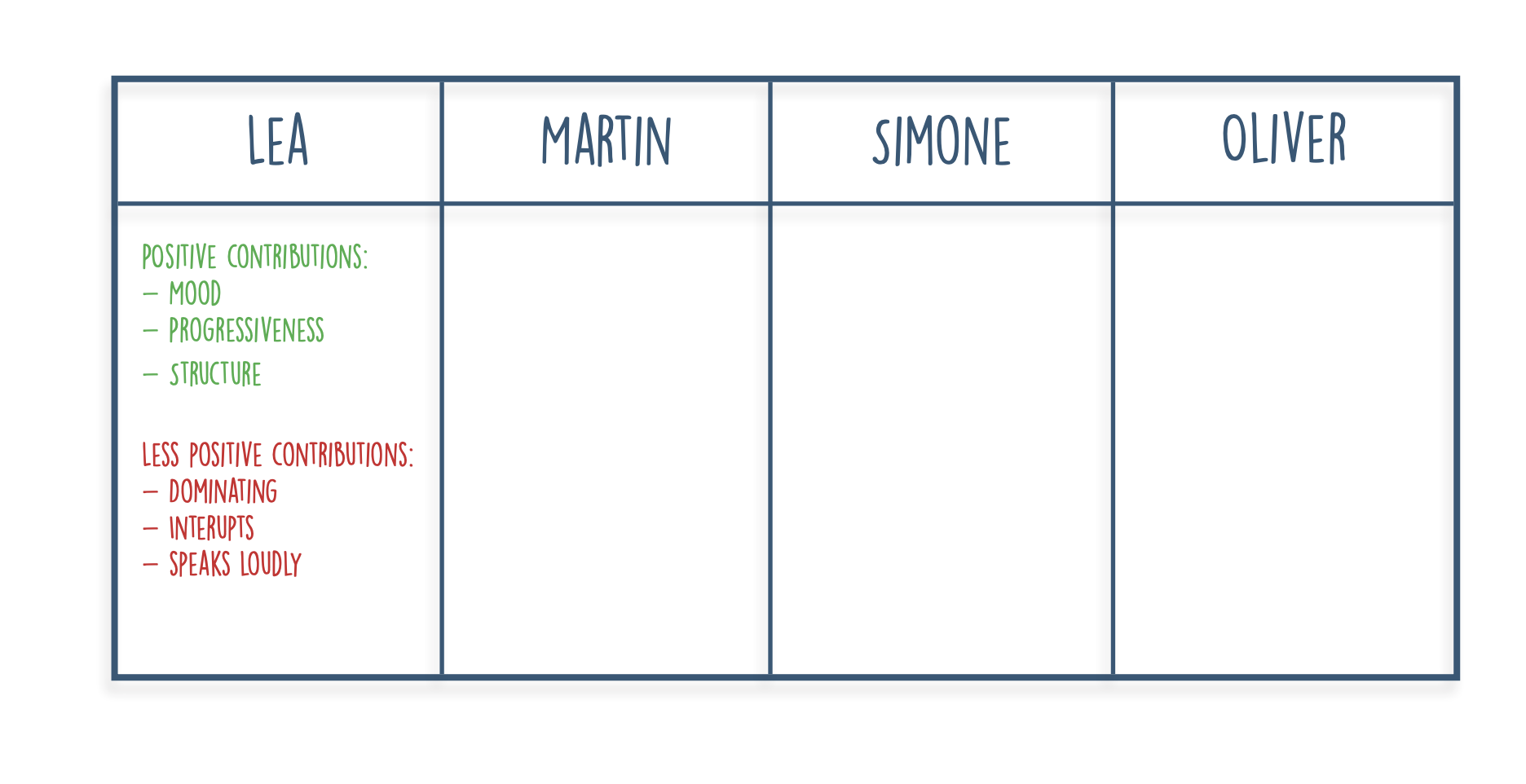
Each team members writes down the answer to the following question on a piece of paper: ”Which three behavioural characteristics describe your positive impact on the team? As accurate and direct as possible!” Afterwards, the facilitator (or one of the team members) collects the answers and defines the three most comprehensive perceptions of positive contributions from the other team members for each team member. Each team member comments on the characteristics of him or herself.
The other team members may explain the positive contributions to the team to start a dialog about the positive contributions of the individual team member. The purpose is to reach consensus about the individual team member’s positive contribution to the team.
Then the exercise is repeated, but this time the question has a different angle. ”Three behavioural characteristics that describe this person’s less positive impact on the team?” As accurate and direct as possible! The facilitator (or one of the team members) repeats the same procedure as before. The exercise ends with a dialogue in the team about what they learned from the exercise.
practical matters
- Paper and pencils.
- A power point presentation that explains the exercise. A slide that gathers the contributions from the team members.
further information
The model is introduced to BAAA by Thomas Cook, AD Resources.
The model is based on the Johari window.
example 1
example 2